Handyman Tips for Water Damage Repair: Save Time & Money
- content
- March 6, 2026
- Plumbing Services
- Flood Damage Fix, Home Restoration Tips, Mold Prevention Guide, Water Damage Cleanup, Water Damage Repair
- 0 Comments
Essential Water Damage Repair Tips to Restore Your Home
Dealing with unexpected water intrusion can be a homeowner’s worst nightmare. Whether it is a burst pipe, a leaking roof, or sudden flooding, the clock starts ticking the moment moisture hits your floors. Without immediate action, structural damage and hazardous mold growth can set in within 24 to 48 hours. In this guide, we provide practical water damage repair tips to help you mitigate the damage, secure your property, and navigate the restoration process efficiently.
There are few sights more gut-wrenching for a homeowner than walking into a room and seeing a tea-colored stain spreading across the ceiling or feeling the unmistakable “squish” of wet carpet underfoot. Water is the silent predator of the home; it doesn’t just sit there—it travels, it soaks, and it destroys.
If you’ve discovered a leak, the clock is ticking. But before you panic and assume you need a $10,000 renovation, take a deep breath. Many handyman water-damage solutions can save your home if you act fast. This minor water damage repair guide is designed to help you navigate the chaos, perform DIY water damage repair, and know exactly when to call a professional handyman.
The Golden Rule: The 24-Hour Window
When it comes to moisture damage, time is your greatest enemy. Mold spores can begin to colonize on damp organic materials (like drywall and wood) in as little as 24 to 48 hours.
Your primary goal in any emergency water damage repair is to stop the source and start the drying process immediately.
Phase 1: The Emergency Water Damage Checklist
Before you pick up a paintbrush or a hammer, you need to secure the site. Follow this home water damage checklist to prevent a bad situation from becoming a catastrophe:
- Stop the Flow: If it’s a burst pipe, turn off the main water shut-off valve immediately. If it’s a roof leak, get a tarp over the exterior or a bucket under the drip.
- Safety First: If water is dripping from a ceiling light fixture or pooling near outlets, turn off the electricity to that circuit at the breaker box. Never walk into a flooded basement without ensuring the power is off.
- Document Everything: Before you start water extraction, take photos and videos. This is crucial for insurance purposes or if you need to show a local water damage handyman the extent of the initial mess.
- Extract the Standing Water: Use a wet/dry vacuum or a sump pump if the flooding is significant. Every gallon you remove manually is a gallon your dehumidifier doesn’t have to pull out of the air.
Phase 2: Identifying the Signs of Hidden Water Damage
Sometimes the damage isn’t an obvious flood. It’s a slow creep. Knowing the signs of hidden water damage can help you fix small water leaks before damage spreads.
- The Musty Smell: That “old basement” smell is usually microbial volatile organic compounds (MVOCs)—the off-gassing of mold.
- Peeling Paint or Bubbling Wallpaper: This is a classic sign that moisture is trapped behind the finish, pushing it away from the wall.
- Warped Wood: If your baseboards look wavy or your hardwood floors are “cupping” (the edges are higher than the center), you have subfloor damage.
- Discoloration: Water stains often look like yellowish-brown rings. If the ring is growing, the leak is active.
Phase 3: DIY Water Damage Repair Steps
1. Structural Drying & Ventilation
You cannot repair a wall that is still damp. Even if it feels dry to the touch, the wet insulation inside the wall might be a soggy mess.
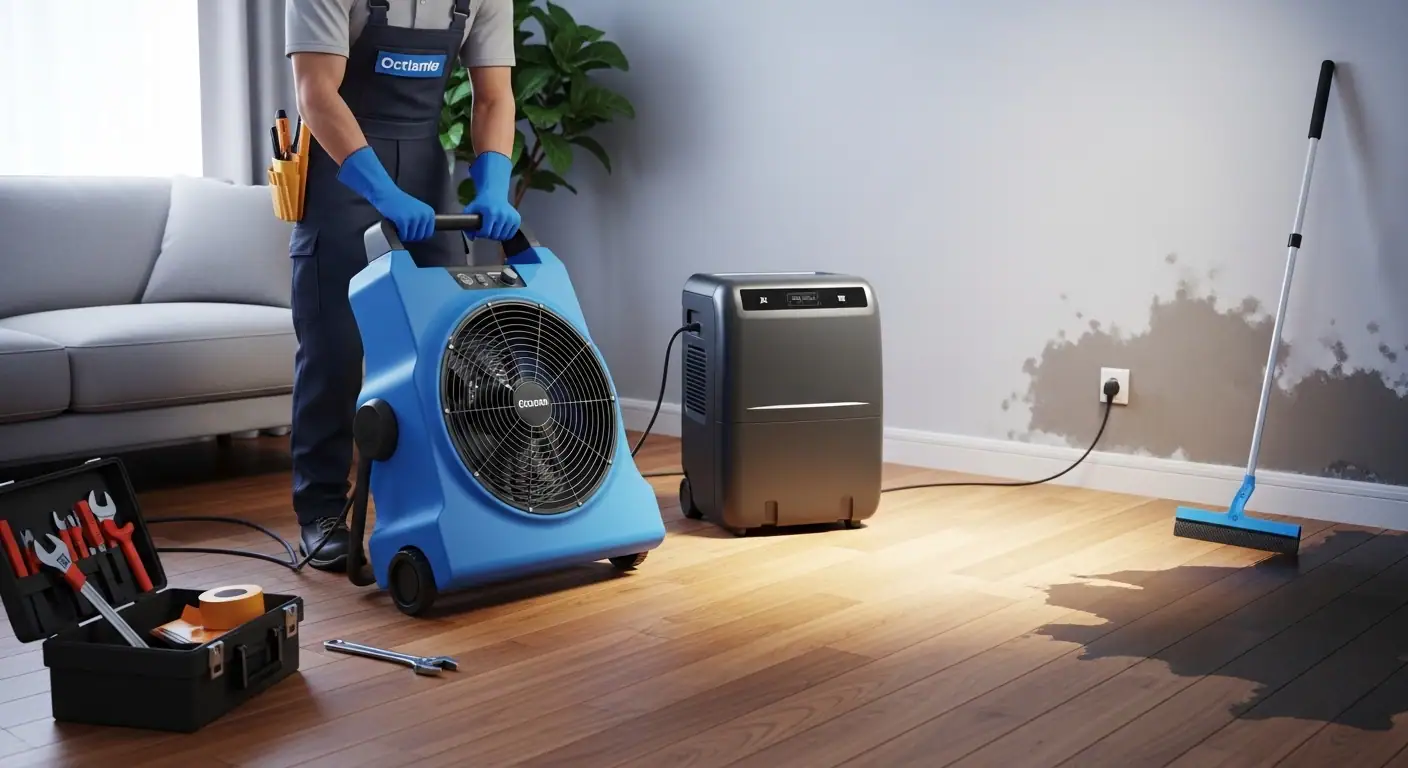
- Handyman Tip: Rent an industrial-grade dehumidifier and air movers. Household fans aren’t enough for structural drying.
- Open the Walls: If the drywall is soft or sagging, you need to cut it open. This allows ventilation into the wall cavity to dry out the studs.
2. How to Repair Water-Damaged Walls
Once the area is bone-dry (use a moisture meter to be sure!), It’s time for drywall repair.
- Cut back to the studs: Don’t just patch a small hole. Cut out a square section of drywall back to the center of the nearest vertical studs.
- Check the insulation: If you have fiberglass or cellulose insulation that got wet, throw it away. It loses its R-value and becomes a breeding ground for mold. Replace it with fresh batts.
- Patch and Sand: Install new moisture-resistant drywall (often called “green board”), tape the seams, apply joint compound, and sand until smooth.
3. Repairing a Water-Damaged Ceiling
A repair water-damaged ceiling job is trickier because of gravity.
- The “Pilot Hole” Trick: If you see a bulge in your ceiling, place a bucket underneath and poke a small hole in the center of the bulge with a screwdriver. This releases the trapped water and prevents the entire ceiling from collapsing under the weight.
- Priming is key: Never paint directly over a water stain. The tannins will bleed through every single time. Use a high-quality, oil-based stain-blocking primer before your finish coat.
4. Salvaging Warped Wood & Subfloors
If you catch a kitchen sink leak repair early, you might save the cabinets from water damage. If the wood is warped wood or plywood, it may “relax” as it dries. However, if the subfloor damage is structural (delaminating or soft spots), it must be replaced to ensure the safety of your flooring.
Phase 4: Mold Prevention After Water Damage
The “repair” isn’t finished just because the hole is patched. To prevent mold after water damage, you must treat all exposed wood studs with an antimicrobial spray. Handyman Secret: A mixture of white vinegar and water can kill mold on hard surfaces, but for serious peace of mind, use a professional-grade borate-based solution that prevents future fungal growth.
Phase 5: When to Call a Professional Handyman
We all love the satisfaction of a DIY win, but water damage is deceptive. You should look for an affordable water damage repair service or a local water damage handyman if:
- The water was “black” or “grey”: If the water came from a sewer backup or a dishwasher, it would contain bacteria. This is a biohazard that requires professional sanitization.
- The damage is structural: if a load-bearing beam shows signs of rot.
- It’s in the crawlspace: Basements and crawlspaces often have poor ventilation, making structural drying nearly impossible for a DIYer.
- Insurance is involved: Most insurance companies prefer (or require) that a licensed professional perform the water damage restoration steps to ensure the home remains insurable.
Handyman Tips for Water Damage Repair: Prevention Costs Less
The cost of water damage repair varies wildly. A simple flapper leak might cost $100 in parts and labor, while a roof leak water damage fix that went unnoticed for months can climb into the thousands.
The best way to save money is to be proactive:
- Install a sump pump with a battery backup.
- Replace rubber washing machine hoses with braided stainless steel.
- Check your bathroom water damage repair needs (like recaulking the tub) every year.
Handyman Home Doctor: Same-Day Handyman Tips for Water Damage Repair
At Handyman Home Doctor, we understand that finding water damage is stressful. You’re worried about your family’s health, your home’s value, and your bank account. That’s why we offer same-day water damage repair and emergency handyman services near you to residents who need a steady hand and expert tools. From residential water damage repair to specialized basement flooding repair tips, we help you navigate the process from the first drop of water to the final coat of paint. We don’t just fix the surface; we ensure the “bones” of your home are dry and safe guide.
Related Posts